
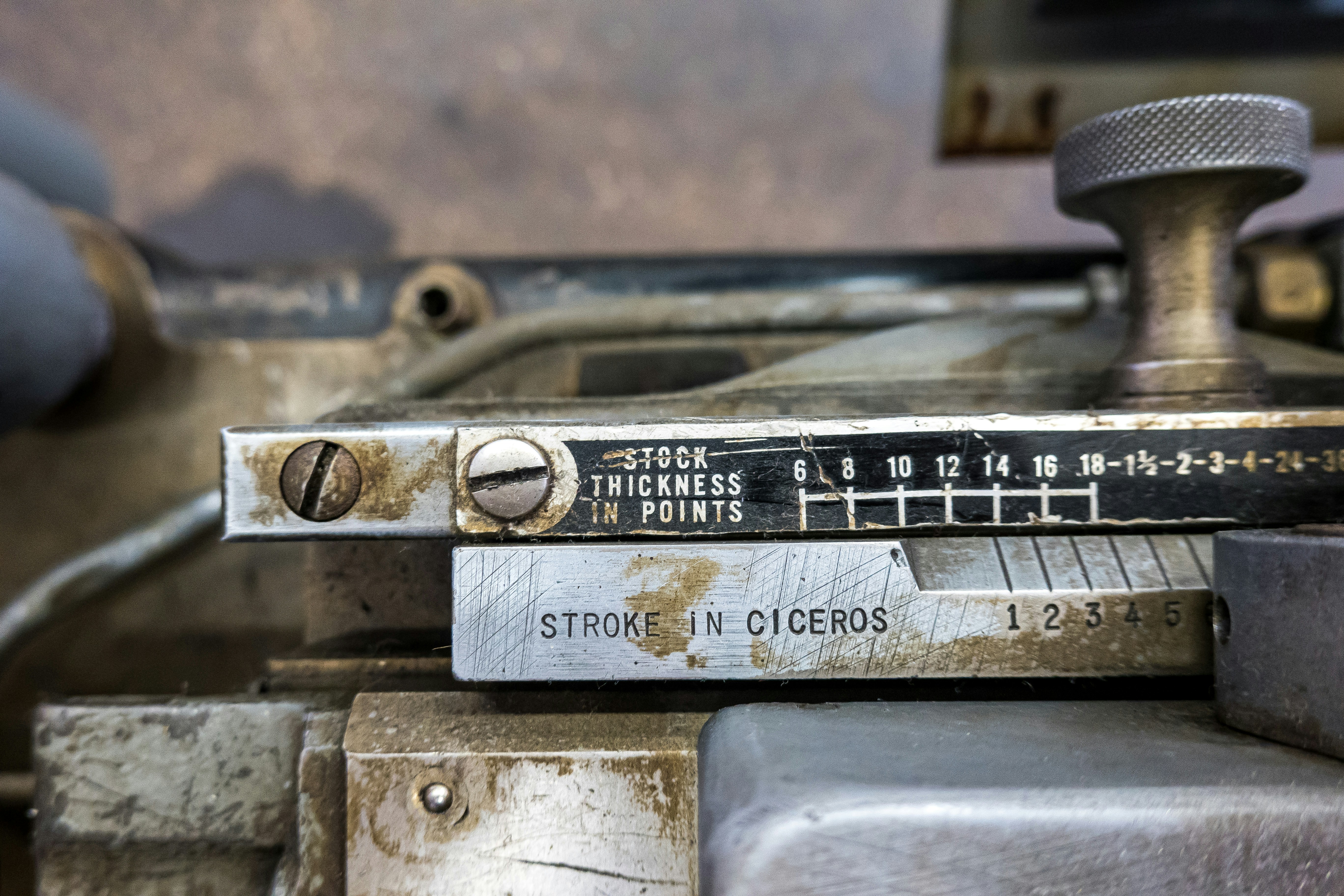
The Origins of Measurement in Industry
The history of measurement in industry dates back to ancient civilizations, where trade and commerce necessitated the development of systems to quantify goods effectively. Early societies relied on natural units of measure, often based on local resources. For example, grains, animal skins, or body parts like the foot and hand were commonly used as rudimentary measures of length and weight.
As trade grew and expanded beyond local economies, the need for standardization became pressing. Different regions employed varied scales and measures, leading to confusion and disputes. To address this challenge, various civilizations began to establish standardized systems. The ancient Egyptians, for instance, developed a system for measuring length based on the cubit, a unit derived from the length of the forearm, which became a standard for constructing monumental architecture.
In parallel, the ancient Mesopotamians introduced the first known measuring tools, such as the balance scale. This innovation allowed merchants to weigh goods accurately, facilitating fair trade. These early scales, consisting of a pivot point and two pans, marked a significant advancement in measurement technology. As trade networks expanded, tools like the measuring rod emerged as vital instruments for ensuring accuracy in transactions involving both commodities and construction projects.
The Greeks and Romans further refined measurement standards, leading to a more systematic approach. They introduced the concept of units that could be universally understood and adopted across different regions, laying the groundwork for future advancements in industrial measurement. The combination of these early methods and tools established a foundation for the sophisticated systems we see today, illustrating the evolving nature of measurement in response to societal needs.
The Industrial Revolution and Measurement Advancements
The Industrial Revolution, which began in the late 18th century, marked a significant turning point in manufacturing and measurement. This era was characterized by rapid technological innovations which dramatically transformed production processes. One of the critical factors in this transformation was the advancement of measurement tools and techniques, which played an essential role in improving efficiency and product quality.
Prior to the Industrial Revolution, measurements were often imprecise and varied significantly from one region to another, creating challenges in trade and industry. However, as manufacturing began to scale, the need for standardization became evident. The establishment of standard units of measurement was essential in facilitating trade and ensuring consistency in production. Innovations such as the metric system emerged from this necessity, providing a universally accepted framework that enhanced manufacturing capabilities.
Among the groundbreaking inventions of this period was the steam engine, developed by James Watt in the late 18th century. The steam engine revolutionized not just transportation but also manufacturing. This powerful new source of energy made it possible to drive machines with precision and reliability, which in turn increased the demand for more sophisticated measurement tools. Measurement of steam pressure, temperature, and efficiency became crucial for optimizing engine performance and for the general advancement of machinery.
Moreover, advancements in tools such as calipers, micrometers, and gauges allowed for greater accuracy in manufacturing components. These tools enabled engineers and machinists to produce parts with tolerances that were previously unattainable, which significantly enhanced the quality and functionality of products.
As the Industrial Revolution progressed, the interplay between technological advancements and measurement methods continued to evolve. In this transformative era, the innovations in measurement not only contributed to the efficiency of manufacturing but also laid the foundation for future developments in industrial practices, ultimately shaping modern industry.
The 20th Century: Standardization and Automation
The 20th century marked a significant turning point in the field of industrial measurement, characterized by a rapid evolution in standardization and the advent of automation. As industries expanded, the need for consistent and reliable measurement methods became essential to ensure quality and efficiency. One of the most pivotal organizations contributing to this standardization was the International Organization for Standardization (ISO), founded in 1947. ISO played a critical role in developing international standards that facilitated trade and manufacturing practices across borders. These standards ensured that products were measured and evaluated according to uniform criteria, enhancing safety and compatibility in various sectors.
During this period, the measurement of dimensions, mass, and other physical properties saw immense advancements. With the advent of digital technology, traditional manual measurement techniques began to be supplemented, and in many cases replaced, by automated systems. This shift was driven by the increasing complexity of industrial processes, which demanded not only precision but also speed. Automated measurement systems significantly reduced the time required to obtain measurements and minimized human error, thereby enhancing overall productivity in industrial settings.
The introduction of computer technology further transformed measurement practices. Computers enabled the development of sophisticated measurement software that could analyze data more accurately and quickly than ever before. Industries began to integrate these advanced systems into their operations, paving the way for real-time monitoring and control. Such capabilities allowed manufacturers to respond promptly to variations in production, ensuring higher quality and reducing waste.
Moreover, the integration of sensor technology allowed for automated measurement systems to function seamlessly within the larger industrial framework. Sensors could continually collect data from processes, which were then analyzed to maintain optimal operating conditions. This evolution in measurement practices fostered a more systematic approach to quality assurance and process management.
In summary, the 20th century was a period of remarkable transformation in industrial measurement, driven by the establishment of global standards and the implementation of automation and computer technology. These changes not only improved the accuracy and reliability of measurements but also revolutionized the way industries operate, laying the groundwork for future advancements in measurement practices.
Future Trends in Industrial Measurement
The landscape of industrial measurement is poised for significant transformation, driven by advancements in digital technologies and the integration of the Internet of Things (IoT) into manufacturing processes. As industries continue to evolve, the adoption of smart factories will enable enhanced operational efficiency and accuracy in measurement techniques.
One notable trend is the rise of real-time data analytics. This advancement allows manufacturers to obtain instantaneous insights into their operations, enabling them to make informed decisions that impact productivity and quality control. By leveraging real-time data, companies can optimize their measurement processes, ensuring that anomalies are detected and addressed promptly. Moreover, the increased connectivity provided by IoT devices facilitates seamless communication among machinery, enhancing calibration processes and minimizing errors.
Another noteworthy development in the field of industrial measurement is the emergence of nanotechnology. This cutting-edge technology allows for the creation of extraordinarily precise measurement tools. For example, at the nanoscale, even minute variations in dimensions can be detected, which will lead to significant enhancements in the accuracy of measurement scales. The integration of nanotechnology could redefine how industries approach dimensions, tolerances, and standards, pushing the boundaries of what is currently possible in measurement precision.
However, with these innovative trends come potential challenges. As industries adapt to new technologies, they must also contend with the complexities of data security and privacy, particularly with the reliance on cloud-based solutions for data storage and analytics. Furthermore, the rapid pace of technological development necessitates continuous training and skill upgrades for personnel to effectively utilize these advanced measurement tools.
In conclusion, the future of industrial measurement is marked by promising innovations such as real-time analytics and nanotechnology. These trends not only enhance measurement accuracy but also pose challenges that industries must navigate to fully harness their potential. As this field continues to evolve, the interplay between innovation and adaptability will be crucial for sustaining competitive advantage in the global manufacturing landscape.