

What is BMI?
Body Mass Index (BMI) is a widely used tool that helps assess an individual’s body weight relative to their height, providing a simple numerical measure to categorize individuals based on their weight status. The BMI is defined as a person’s weight in kilograms divided by the square of their height in meters (kg/m²). This straightforward calculation results in a numerical value that can be used to determine if a person is underweight, normal weight, overweight, or obese based on established thresholds.
Calculating BMI is relatively simple. Individuals need to know their weight in kilograms and their height in meters. For example, if a person weighs 70 kg and is 1.75 meters tall, their BMI would be calculated as follows: 70 divided by (1.75 multiplied by 1.75), yielding a BMI of approximately 22.9. This value then falls into one of several established categories, which serve as indicators of potential health risks associated with being underweight, overweight, or obese.
The BMI categories are defined as follows:
- Underweight: A BMI less than 18.5
- Normal Weight: A BMI from 18.5 to 24.9
- Overweight: A BMI from 25 to 29.9
- Obesity: A BMI of 30 or greater
Each of these categories carries different implications concerning health. For instance, individuals classified as underweight may face nutritional deficiencies, while those in the overweight and obese categories may be at higher risk for various health conditions, including heart disease and diabetes. Although BMI is a useful screening tool, it is essential to consider other factors such as muscle mass, distribution of fat, and overall health behaviors for a comprehensive assessment of an individual’s health status.
The Importance of BMI in Weight Management
Body Mass Index (BMI) is a widely utilized measure that helps evaluate an individual’s weight in relation to their height, providing a simple numeric measure of body fat. It is particularly valuable for determining whether a person is underweight, at a healthy weight, overweight, or obese. Healthcare professionals rely on BMI as a reliable initial screening tool to categorize weight status, which can inform further assessments and decisions regarding weight management strategies.
BMI serves as an essential tool in weight management because it allows for a straightforward classification of body weight. By assessing BMI, healthcare providers can identify individuals who may be at risk for obesity-related health issues, including cardiovascular disease, diabetes, and certain cancers. These health risks often correlate with higher BMI values, signalling the need for weight loss or gain interventions as required, thus enhancing the body’s overall health.
In clinical settings, practitioners often utilize BMI alongside other assessments to develop a comprehensive weight management plan tailored to the individual’s needs. For instance, a person with a high BMI may be advised to adopt lifestyle changes, such as diet modifications and increased physical activity, to achieve a healthier weight. Conversely, individuals who are classified as underweight may receive guidance on strategies to gain weight safely. This dual approach underscores BMI’s importance not only in identifying potential health risks but also in facilitating appropriate guidance for achieving and maintaining a healthy weight.
In conclusion, BMI is a crucial component in the realm of weight management. Its ability to categorize individuals effectively helps healthcare professionals to guide necessary lifestyle changes and interventions aimed at enhancing health and preventing disease associated with unhealthy weight levels.
Limitations of BMI as an Indicator of Health
The Body Mass Index (BMI) has become a widely recognized standard for assessing whether an individual has a healthy body weight. However, despite its popularity, BMI has several significant limitations that hinder its effectiveness as a sole indicator of health.
One primary criticism of BMI is that it does not differentiate between muscle mass and fat mass. Since BMI is calculated using height and weight alone, individuals with higher muscle mass may be classified as overweight or obese, despite having a low body fat percentage. This misclassification can mislead individuals regarding their actual health status, as muscle contributes more to overall weight than fat.
Additionally, BMI does not take into account the distribution of body fat. For example, two individuals with the same BMI can have very different body fat distributions, which can influence health risks. Central obesity, or the accumulation of fat around the abdomen, is a more significant health concern than fat distributed elsewhere. This variance highlights the need for a more comprehensive assessment of health based on body composition.
Furthermore, BMI may not reflect variations in body composition across different populations and ethnicities. Factors such as genetic background, age, and gender can influence how body fat is accumulated and distributed. Consequently, BMI might not provide an accurate health assessment for all groups, leading to inconsistent conclusions regarding a population’s health status.
Therefore, while BMI can serve as a preliminary screening tool, it is essential to adopt a holistic approach to health. This approach should incorporate additional metrics such as waist-to-hip ratio, body fat percentage, and overall physical fitness. Evaluating health through multiple lenses allows for a more accurate understanding and promotes individualized health strategies that can cater to the unique needs of each person.
Alternative Methods for Assessing Body Composition
While Body Mass Index (BMI) has been a widely utilized metric for assessing health in relation to weight, it is essential to understand that it does not provide a complete picture of an individual’s body composition. Various alternative methods exist that can offer insights and a deeper understanding of health that BMI alone cannot achieve. These methods include waist circumference, body fat percentage measurements, and advanced metrics such as bioelectrical impedance analysis.
Waist circumference is a simple yet effective method to evaluate abdominal fat distribution, which is a significant risk factor for various health conditions, including cardiovascular disease and diabetes. A larger waist circumference can indicate higher levels of visceral fat, which is particularly harmful. This measurement is easily obtained and can serve as a valuable complement to BMI, providing additional context about health risks associated with obesity.
Another important alternative assessment is body fat percentage measurement. This metric distinguishes between fat mass and lean body mass, allowing for a more nuanced understanding of an individual’s composition. Techniques such as dual-energy X-ray absorptiometry (DEXA), hydrostatic weighing, and skinfold measurements can offer detailed insights that BMI might overlook. For instance, an individual might fall within a healthy BMI range but have a high body fat percentage, elevating their risk for metabolic disorders.
Incorporating these methods into weight management strategies enables individuals and healthcare professionals to adopt a more comprehensive approach to health. By understanding not just how much a person weighs, but how their body composition contributes to overall health, these methods provide a foundational basis for tailored weight management programs. Utilizing multiple tools assists in painting a more accurate picture of an individual’s health, aiding in more informed and effective decision-making regarding lifestyle changes and interventions.
Want to Check you BMI health follow-up? Here are selected items to check:
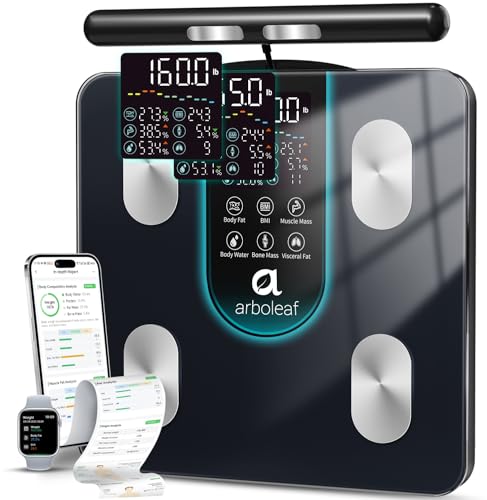
- 7-in-1 Display for At-a-Glance Check-Ins: The digital bathroom scale displays Weight, BMI, Body Fat, Muscle Mass, Body W…
- 8-Electrode Dual-Frequency Full-Body Readings: Built as a body composition scale with a handle and foot electrodes, it u…
- 50+ App Metrics with Segmental Views: Beyond being a scale with BMI, body fat, muscle mass tracking, the Arboleaf App un…
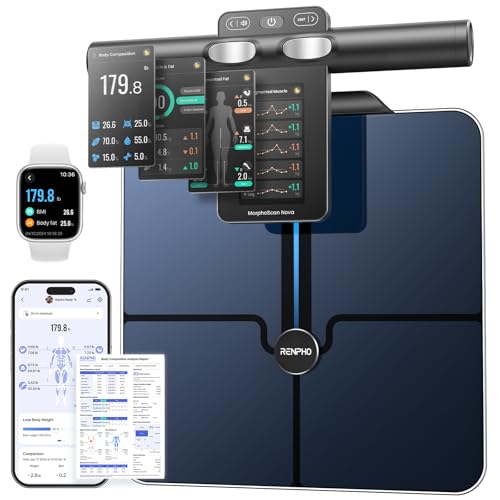
- FSA/HSA eligible
- Clear TFT-LCD Handle Display: The 4.3-inch screen of the body composition scale displays 9 pages of detailed measurement…
- Precision in Measurement: Equipped with eight-electrode dual-frequency and segmental BIA technology, the RENPHO MorphoSc…

- 8-Electrode Full-Body Precision Analysis: Utilizing advanced 8-electrode segmental BIA technology, this smart scale with…
- Ergonomic Handle with 5.3”Color Display for Easy Reading: The innovative body fat scale with handles features a large 5….
- Smart App for Tracking & Seamless Health Ecosystem Sync: Download the Fit Profile app to track all body composition tren…
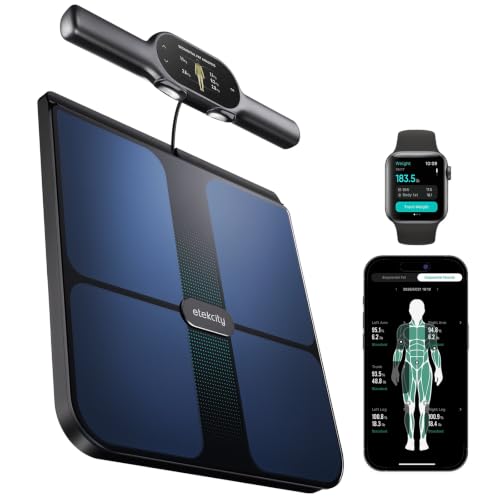
- 𝐃𝐄𝐗𝐀-𝐕𝐚𝐥𝐢𝐝𝐚𝐭𝐞𝐝 𝐁𝐨𝐝𝐲 𝐂𝐨𝐦𝐩𝐨𝐬𝐢𝐭𝐢𝐨𝐧: Etekcity’s body composition algorithm is developed and calibrated using real human data…
- 𝐓𝐫𝐮𝐬𝐭𝐞𝐝 𝐁𝐨𝐝𝐲 𝐂𝐨𝐦𝐩𝐨𝐬𝐢𝐭𝐢𝐨𝐧 𝐑𝐞𝐬𝐮𝐥𝐭𝐬: Science-backed system designed to better reflect real body composition changes over ti…
- 𝐅𝐮𝐥𝐥-𝐁𝐨𝐝𝐲 𝐀𝐧𝐚𝐥𝐲𝐬𝐢𝐬: Measure more than weight with 5-segment body analysis and more than 50 body metrics. Track how fat a…

- 𝙁𝙎𝘼 / 𝙃𝙎𝘼 𝙚𝙡𝙞𝙜𝙞𝙗𝙡𝙚
- 𝙄𝙈𝙈𝙀𝙍𝙎𝙄𝙑𝙀 𝘼𝙋𝙋 𝙀𝙓𝙋𝙀𝙍𝙄𝙀𝙉𝘾𝙀: Free Vesync APP can sync information with Apple Health, Google Fit, FitBit, MyFitnessPal and S…
- 𝙎𝙈𝘼𝙍𝙏 𝙒𝙞-𝙁𝙞 𝘾𝙊𝙉𝙉𝙀𝘾𝙏𝙄𝙑𝙄𝙏𝙔: The scale effortlessly connects to Wi-Fi, automatically syncing your health data to the cloud …
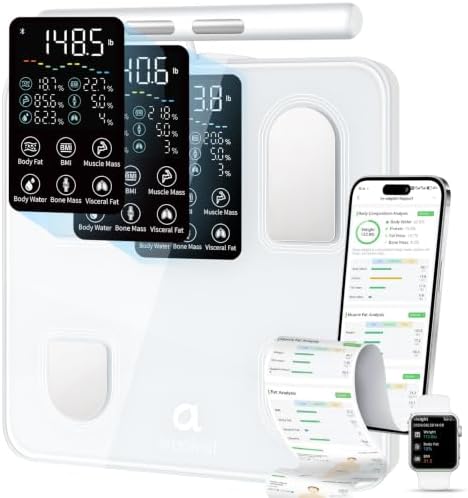
- Comprehensive Body Data Analysis – 8-electrode segmental tech measures 50+ metrics: weight, BMI, body fat %, visceral fa…
- Segmental High-Precision Measurements – Handheld + foot electrodes capture data from arms, legs & torso for a full-body …
- Extra-Large HD Display – 12.2″ x 12.2″ tempered glass platform with tip-resistant design. Bright LED shows 7 key metrics…
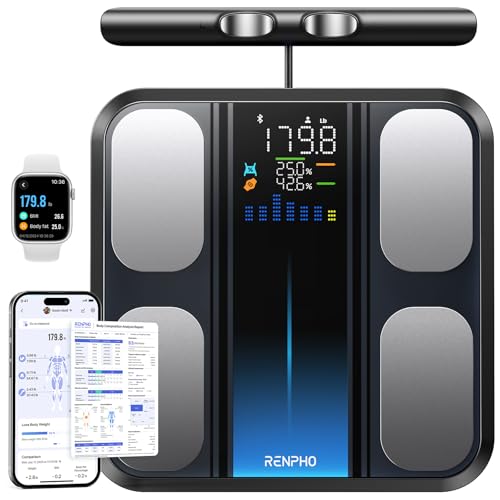
- Innovative & Precise: With eight-electrode dual-frequency and segmental BIA technology, this body fat scale provides acc…
- Comprehensive LED Display: Shows BMI, body fat percentage, skeletal muscle percentage, visceral fat index, and a seven-d…
- Detailed Health Report: This RENPHO smart scale supports viewing additional body data analysis including segmental body …

- FSA / HSA ELIGIBLE. Starfit APP syncs with Apple Health, F1tbit, Health Connect. Compatible with Fitdays.
- 7 DATA READINGS ON DISPLAY: The scale handle is equipped with a bright TFT LCD in full color, making it easy to read the…
- 28 BODY COMPOSITION METRICS: Runstar 8-electrode bathroom scale through both hands and feet touch electrodes, high and l…